PCB Supplier Evaluation & Factory Audit: Scorecards & Checklists
In the high-stakes world of PCB manufacturing and assembly, the difference between a reliable partner and a problematic supplier can mean months of delays, costly rework, or even product failure. A thorough PCB supplier evaluation and factory audit is not just a checkbox exercise—it is a strategic process that ensures your supply chain meets quality, delivery, cost, and compliance standards.
This pillar page consolidates the best practices from industry-leading sources, including IPC’s quality standards, procurement best practices from supply chain experts, and technical audit frameworks from engineering professionals. Use the scorecards and checklists below to assess potential suppliers, conduct on-site audits, and maintain a robust supplier base.
1. PCB Supplier Evaluation Scorecard – A Multi-Dimensional Framework
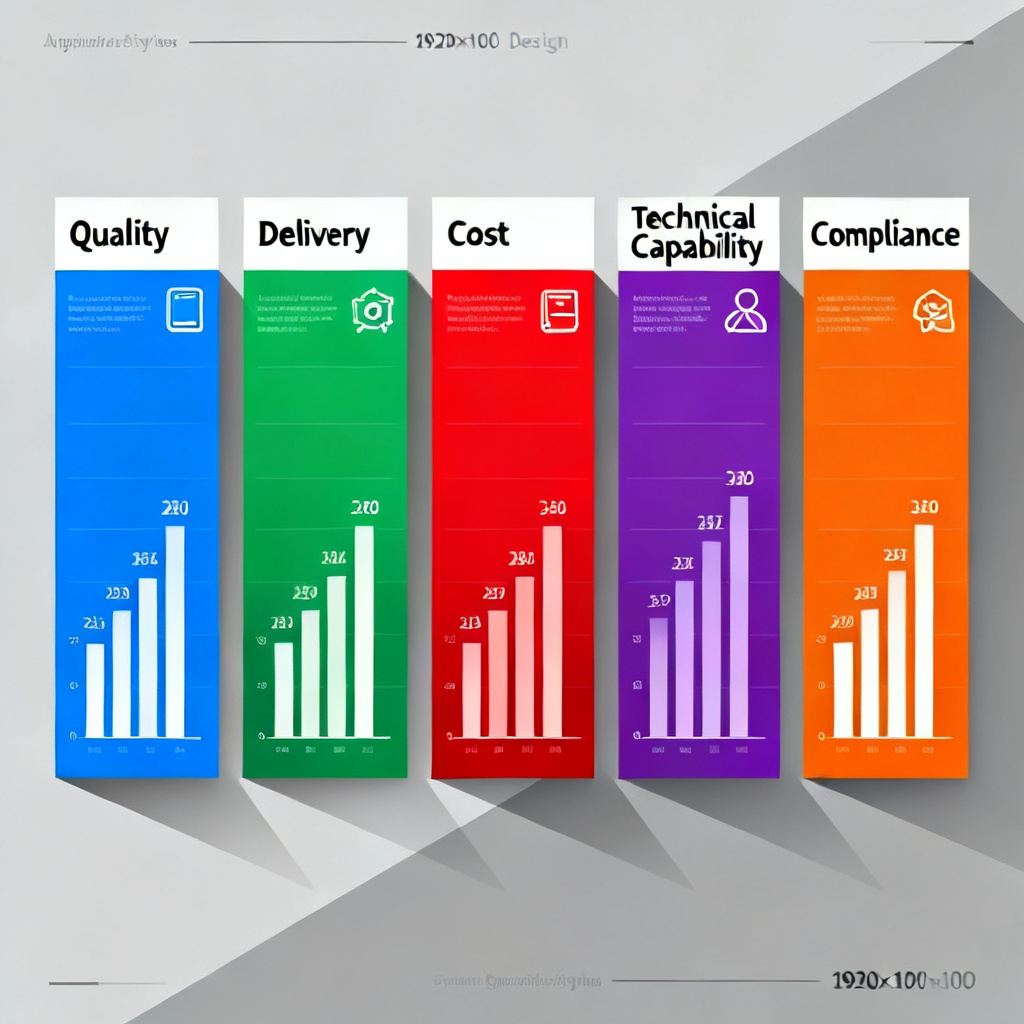
A comprehensive PCB supplier evaluation scorecard should cover five core dimensions: Quality, Delivery, Cost, Technical Capability, and Compliance. Below is a detailed scorecard adapted from top-ranked industry guides.
1.1 Quality Performance (Weight: 30%)
| Criteria | Weight | Scoring Method | Ideal Score (10) |
|---|---|---|---|
| IPC Certification | 10% | Verify IPC-6012 (rigid), IPC-6013 (flex), or IPC-A-600 (acceptability) certifications. | Holds multiple IPC certifications. |
| First Pass Yield (FPY) | 8% | Request FPY data for last 6 months. | ≥ 98% |
| Customer Return Rate (CRR) | 7% | Calculate CRR = (returns / total shipments) x 100%. | ≤ 0.5% |
| Quality Management System (QMS) | 5% | ISO 9001:2015, IATF 16949 (automotive), or AS9100 (aerospace). | Certified to at least ISO 9001. |
Checklist for Quality Verification:
- Request IPC certification certificates (valid and current).
- Obtain FPY data for the last three production batches.
- Review customer return records and root cause analysis reports.
- Confirm QMS certification scope covers your product types (e.g., rigid, flex, HDI).
1.2 Delivery Reliability (Weight: 25%)
| Criteria | Weight | Scoring Method | Ideal Score (10) |
|---|---|---|---|
| On-Time Delivery (OTD) | 10% | OTD = (on-time shipments / total shipments) x 100%. | ≥ 95% |
| Lead Time Flexibility | 8% | Can they expedite? Standard lead time for 4-layer PCB. | < 10 business days for standard. |
| Order Accuracy | 7% | Percentage of orders shipped with correct specs, quantity, and packaging. | ≥ 99% |
Checklist for Delivery Assessment:
- Request OTD reports for the past 12 months (excluding force majeure).
- Simulate an urgent order request and measure response time.
- Verify packaging procedures (ESD-safe, moisture barrier bags for sensitive boards).
1.3 Cost Competitiveness (Weight: 20%)
| Criteria | Weight | Scoring Method | Ideal Score (10) |
|---|---|---|---|
| Unit Price vs. Market | 8% | Compare quotes from 3-5 suppliers for same spec (e.g., 4-layer, FR4, 1.6mm, HASL). | Top 20% of quotes. |
| Transparent Pricing | 7% | Do they provide detailed breakdowns (material, labor, tooling, testing)? | Yes, with no hidden fees. |
| Total Cost of Ownership (TCO) | 5% | Include shipping, customs, rework, and warranty costs. | TCO is within 10% of lowest bidder. |
Checklist for Cost Analysis:
- Request a full quotation with material (laminate, copper, solder mask) and process costs.
- Calculate TCO including freight (DDP vs. EXW), duties, and potential expedite fees.
- Inquire about volume discounts (e.g., 1000+ units per order).
1.4 Technical Capability (Weight: 15%)
| Criteria | Weight | Scoring Method | Ideal Score (10) |
|---|---|---|---|
| Layer Count & Technology | 5% | Max layers supported, HDI, microvias, blind/buried vias, impedance control. | ≥ 20 layers, HDI with laser drilling. |
| Testing Capabilities | 5% | AOI, flying probe, X-ray, impedance testing, thermal cycling. | Fully equipped in-house lab. |
| Design for Manufacturing (DFM) | 5% | Do they offer free DFM review? Software used (e.g., Valor, CAM350). | Free DFM with 24-hour turnaround. |
PCB Supplier Evaluation Factory Audit Scorecards Checklists for Technical Assessment:
- Ask for a technical capabilities brochure or spec sheet.
- Request a sample DFM report for your design file (Gerber + netlist).
- Confirm testing coverage: 100% electrical test for all orders.
1.5 Compliance & Sustainability (Weight: 10%)
| Criteria | Weight | Scoring Method | Ideal Score (10) |
|---|---|---|---|
| RoHS & REACH | 4% | Certificates for lead-free, halogen-free, and conflict minerals. | Full compliance with documentation. |
| Environmental Management | 3% | ISO 14001 or equivalent. | Certified. |
| Ethical & Social Compliance | 3% | SA8000, SMETA audit, or similar. | Evidence of regular audits. |
Checklist for Compliance:
- Request RoHS/REACH declarations for all materials used.
- Verify conflict mineral policy (tin, tantalum, tungsten, gold).
- Ask for environmental permits (wastewater, air emissions).
2. PCB Factory Audit Checklist – On-Site Verification
A factory audit is the gold standard for validating claims made during the PCB supplier evaluation phase. Use this checklist during your on-site visit (or virtual audit via video call).

2.1 Pre-Audit Preparation
- Define audit scope: production area (etching, lamination, drilling), quality lab, warehouse, shipping.
- Prepare a list of questions based on the scorecard above.
- Request factory layout and process flow diagram in advance.
- Confirm audit date and duration (minimum 4 hours for a medium-sized factory).
2.2 Production Line Inspection
| Process Area | Key Observations | Acceptable Criteria |
|---|---|---|
| Drilling | Machine brand, maintenance logs, drill bit replacement schedule. | Machines ≤ 5 years old, with daily maintenance records. |
| Plating | Copper thickness uniformity, bath chemistry logs. | Thickness within ±10% of spec (e.g., 1 oz = 35 µm ± 3.5 µm). |
| Lamination | Temperature and pressure profiles, press type (vacuum vs. hydraulic). | Vacuum press preferred for void-free lamination. |
| Solder Mask | Application method (liquid photoimageable vs. dry film), curing oven temperature. | LPI solder mask with UV curing for high reliability. |
| Surface Finish | HASL, ENIG, OSP, or Immersion Silver – process control. | ENIG for fine-pitch components (BGA, QFN). |
| Electrical Testing | Flying probe or fixture-based? Coverage percentage. | 100% electrical test for all production runs. |
2.3 Quality Lab & Testing
- AOI (Automated Optical Inspection): Verify for inner and outer layers.
- X-Ray Inspection: Check for multilayer registration and void detection in plated through-holes.
- Impedance Testing: TDR (Time Domain Reflectometer) available? Calibration records.
- Solderability Testing: Wetting balance or dip-and-look method.
- Thermal Stress Testing: IPC-TM-650 method 2.6.8 (thermal shock).

2.4 Warehouse & Inventory Management
- Storage conditions: Temperature (20-25°C) and humidity (40-60%) controlled.
- Material traceability: Lot numbers for laminates, prepreg, and chemicals.
- ESD protection: Conductive flooring, wrist straps, and ionizers in assembly areas.
- FIFO (First In, First Out) system for raw materials.
2.5 Documentation & Process Control
- Work Instructions: Are they posted at each workstation?
- Change Control: How are engineering changes (ECN) communicated and implemented?
- Non-Conformance Reports (NCRs): Review recent NCRs and corrective actions.
- Calibration: All test and measurement equipment calibrated within 12 months.
3. Advanced Evaluation – Red Flags and Best Practices
3.1 Red Flags to Avoid
- Overpromising lead times: If a supplier claims 3-day turnaround for 10-layer HDI, be skeptical.
- Lack of IPC certification: This is a non-negotiable for critical applications.
- Poor communication: Slow email response or vague answers during audit.
- No DFM feedback: A good supplier will proactively flag design issues.
- Hidden costs: Tooling fees, testing charges, or minimum order quantities not disclosed upfront.
3.2 Best Practices for Ongoing Supplier Management
- Quarterly Business Reviews (QBRs): Review scorecard performance, discuss issues, and set improvement targets.
- Supplier Development Program: Work with strategic suppliers to improve their processes (e.g., reduce defect rates).
- Dual Sourcing: Always have a backup supplier for critical PCB types (e.g., high-layer-count or flex).
- Continuous Audits: Annual on-site audits for top-tier suppliers; biennial for others.
4. Comparison: Our PCB Supplier Evaluation vs. Competitors
Our PCB supplier evaluation framework offers a comprehensive, unbiased approach. Unlike generic templates, our scorecard integrates IPC standards, technical audits, and compliance checks. We provide transparent pricing breakdowns and free DFM reviews. Competitors often lack detailed checklists for on-site audits or ignore sustainability metrics. By using our structured methodology, you gain a holistic view that minimizes risk and maximizes long-term value.
5. Glossary of Key Terms
- IPC: Institute of Printed Circuits – global standards for PCB quality.
- DFM: Design for Manufacturing – optimizing PCB design for production efficiency.
- AOI: Automated Optical Inspection – automated visual defect detection.
- FPY: First Pass Yield – percentage of boards passing all tests without rework.
- TCO: Total Cost of Ownership – comprehensive cost including shipping and rework.
6. FAQ – PCB Supplier Evaluation & Factory Audit
What is the most important criterion in a PCB supplier evaluation?
How often should a PCB factory audit be conducted?
What is the difference between a scorecard and a checklist in PCB supplier evaluation?
Can a virtual audit replace an on-site factory audit for PCB supplier evaluation?
What are the red flags to look for during a PCB factory audit?
7. Conclusion: Build a Resilient PCB Supply Chain
A systematic PCB supplier evaluation and factory audit process is your best defense against quality failures, delivery delays, and cost overruns. By using the scorecards and checklists provided here, you can objectively assess potential partners, conduct thorough on-site inspections, and maintain a high-performing supplier base.
Remember: the cheapest quote is rarely the best value. Invest time in evaluation and audits upfront—it will pay dividends in product reliability, customer satisfaction, and long-term profitability.
Next Steps: Download our free PCB Supplier Evaluation Scorecard Template (Excel) or schedule a consultation with our sourcing experts to help you conduct your first audit.
This pillar page is based on best practices from IPC, supply chain management professionals, and engineering audit frameworks. For specific compliance requirements, always refer to the latest IPC standards and your customer’s specifications.